Intelligent monitoring system for agricultural well operation, easy to deploy and highly reliable
As a professional provider of IoT data acquisition solutions and an expert in industrial IoT data acquisition, the editor of Shanghai Data Acquisition IOT Technology Co., Ltd, (daq-iot) hereby presents the following introduction, and sincerely welcomes discussions and exchanges. Supported Communication Interfaces: CAN, RS485, Mbus, 4–20mA, Profibus, CC-Link, HART, digital I/O, etc. Industrial Protocols: Modbus RTU/TCP, HJ212, IEC104, DLT645, DLMS, IEC61850, MQTT, etc. Mail:export@daq-iot.com
Implementation Plan for Intelligent Monitoring of Farm Machinery Well Operation
Preface to the Plan
As the core infrastructure of agricultural irrigation, farmland wells generally have problems such as wide distribution range, difficult field wiring, high cost of manual inspection, and untimely monitoring of operation status. The traditional manual inspection mode not only cannot achieve full time monitoring, but also is prone to irrigation delays due to electrical failures and abnormal shutdowns of wells. At the same time, it is difficult to accurately calculate energy consumption and optimize irrigation scheduling. This plan relies onShanghai DAQ-IoT Network TechnologyLimited CompanySC-GP-EM4G wireless power monitoring deviceBy developing a low-cost, easy to deploy, and highly reliable intelligent monitoring system for agricultural well operations, we aim to achieve the collection of electrical parameters Real-time, operation status Remote Monitoring, and automatic alarm for abnormal situations. This will promote the transformation of agricultural irrigation from "manual management" to "intelligent and refined management", providing solid data support and technical support for agricultural water conservation, energy conservation, and improving irrigation efficiency.
1、 Core objectives of the plan
1. Full parameter Real-time monitoring: Accurately collect core electrical parameters such as single-phase/three-phase voltage, current, active power, apparent power, power factor, and active energy of the well water pump, and Real-time can grasp the electricity consumption and operating load of the well.
2. Intelligent judgment of operating status: Automatically judge the start stop status, normal operation/fault shutdown/no-load operation and other working conditions of the well through changes in electricity data, to eliminate problems such as equipment "idling" and "abnormal shutdown".
3. Automatic alarm for abnormal situations: realize instant alarm for abnormal situations such as overvoltage, overcurrent, equipment offline, voltage loss, etc., and push notifications through platforms, SMS and other methods to ensure the safety of electrical use in the well and reduce the time for fault disposal.
4. Energy consumption data statistical analysis: Automatically store the historical operation and energy consumption data of the well, support the generation of data reports and trend curves by hour, day, and month, and provide data basis for irrigation scheduling, energy consumption quota management, and agricultural water and energy conservation.
5. Unmanned centralized management: replaces the traditional manual inspection mode, realizes remote centralized monitoring of multiple machine wells, and a single manager can manage dozens of machine wells at the same time, greatly reducing labor and material costs.
6. Flexible docking and expansion: Support seamless integration with third-party agriculture IoT platforms and smart agriculture management systems, achieve data sharing, and adapt to the overall construction needs of smart agriculture.
2、 Selection and Characteristics of Core Monitoring Equipment
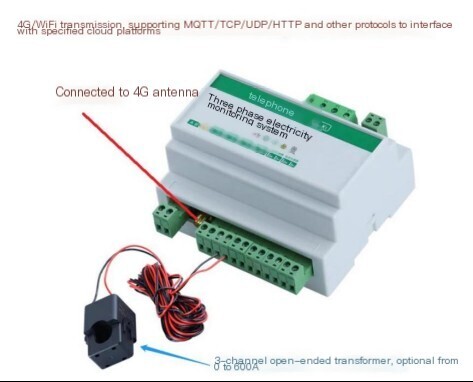
The SC-GP-EM4G wireless power monitoring device, specially designed byShanghai DAQ-IoTTechnology for industrial decentralized equipment monitoring, is selected. The device is suitable for complex outdoor environments in farmland, does not require complex wiring on site, and can be quickly installed in the distribution box of the well. It is the best choice for decentralized monitoring of farmland wells. The specific equipment characteristics are as follows:
2.1 Core Functions
1. Support monitoring of single-phase/three-phase well equipment, capable of Real-time collecting voltage and current, automatically calculating electrical parameters such as active power, apparent power, power factor, operating frequency, and active energy, and fully restoring the power consumption of well operation;
2. Equipped with 4G/WiFi/LoRa wireless transmission mode, data can be directly uploaded to the cloud platform for remote Real-time viewing;
3. Cooperating with relays can automatically cut off power supply due to overvoltage/current, achieve electrical safety protection for well use, and avoid damage caused by electrical faults;
4. The default collection frequency is reported within 5 minutes, and remote modification of the collection frequency is supported to meet the monitoring needs of different irrigation scenarios;
2.2 Key Hardware Parameters
1. Shell: ABS fireproof material, suitable for farmland -20 ℃~70 ℃, 0~95% RH outdoor harsh working environment without condensation, dustproof and anti-aging;
2. Installation method: Wall mounted, compact in size and lightweight (200g), can be directly installed in the well distribution box, saving space;
3. Collection channel: 6 channels of AC current and voltage, with a range of 0-600A for current transformers (default 100A), suitable for different power well water pumps;
4. Measurement accuracy: Voltage 100V-400V (accuracy 0.5% rdg.), current 0-100A (accuracy 2% rdg.), Data Acquisition accurate, meeting the requirements of agricultural monitoring and measurement;
5. Power supply: 220VAC, RS-485 communication line equipped with 4000V surge and static protection, ensuring stable and reliable equipment operation;
2.3 Core advantages
1. Non invasive acquisition: Open type transformer design, clamp type installation on the well circuit, no need to disconnect, does not affect the normal operation of the well;
2. Easy installation: Only workers need to connect the power for installation on site, without professional debugging. Single point installation takes short time and can quickly achieve batch deployment of multiple wells;
3. Protocol Compatibility: Supports Modbus RTUMQTT/TCP/UDP/HTTPWaiting for mainstream communication Protocol, it can seamlessly integrate with the platform and support Protocol customization;
4. Platform support: Factory default connection to Shanghai Shucai Industry IoT platform, providing dual interfaces for computer and mobile devices, without the need for separate platform development, ready to use out of the box.
2.4 Auxiliary equipment
IoT Gateway: For areas with weak 4G signals in farmland, configureLoRaGatewayRealize data aggregation and ensure stable data upload;
Extended antenna: used for well locations with weak 4G signals, externally connected to areas with good signal outside the distribution box to solve signal blind spots;
Relay: In conjunction with a wireless power monitoring device, it can automatically cut off overvoltage and overcurrent, enhancing the safety protection level of electrical equipment in the well.
3、 Overall system architecture
This plan adoptsPerception layer Transport layer Platform layer Application layerThe four layer architecture realizes the full process intelligence of monitoring the operation of agricultural machinery wells. The architecture design is adapted to the characteristics of wide area distribution, difficult wiring, and complex environment in farmland. The specific details are as follows:
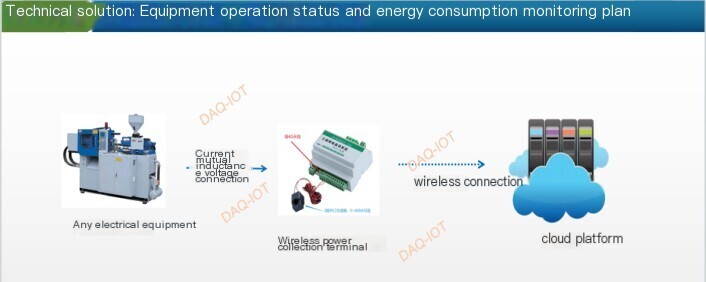
(1) Perception layer: Data Acquisition core
Composed of SC-GP-EM4G wireless power monitoring devices, deployed in the distribution boxes of each well, responsible for collecting electrical parameters such as well voltage, current, power, and energy, providing a data foundation for the entire system. The sensing layer equipment is designed with wireless non-invasive technology, allowing for rapid deployment without construction difficulties.
(2) Transport Layer: Wireless Data Interchange
adopt4G as the main mode, supplemented by LoRa/NB IoTThe wireless transmission method is used, and the data collected by the perception layer device is directly uploaded to the cloud platform through 4G; To address the 4G signal blind spots in the field, LoRa Gateway is used to aggregate data before uploading, ensuring uninterrupted data transmission at all well locations without the need for field wiring and reducing construction costs.
(3) Platform layer: Data processing center
Relying on theShanghai DAQ-IoTwebsiteIndustrial IoT platform(Supporting third-party platform integration), realizing data reception, storage, analysis, alarm, and statistics, with core functions such as data Real-time refresh, historical storage, curve generation, report export, alarm configuration, etc., providing data support and management capabilities for the application layer.
(4) Application layer: Remote management terminal
providePC browserandMobile WeChat AppWith a dual operation interface, managers can view the data, operational status, and historical reports of the well Real-time anytime and anywhere in the office or field, receive abnormal alarm notifications, and achieve remote centralized management of the well, truly achieving "unmanned operation and handheld control".
4、 On site installation and deployment implementation
The installation of equipment in this plan followsSafe, convenient, and fastPrinciple: All wiring operations should be completed by personnel with professional electrician qualifications, strictly following the safety regulations for agricultural electricity use. Single point installation can be completed within 30 minutes. The specific implementation steps are as follows:
(1) Preliminary on-site investigation and preparation
1. Well parameter mapping: Count the single-phase/three-phase type, power, and line diameter of each well water pump, match the corresponding current transformer diameter (16mm/24mm) and range (0~100A/0~600A) to ensure equipment compatibility;
2. Installation location confirmation: Determine the installation space for the monitoring instrument and transformer in the well distribution box, prioritize the position of the water pump main circuit switch circuit breaker, and reserve operating space;
3. Signal testing: Test the 4G signal strength at each well location, with a focus on identifying weak signal areas in remote fields and poorly sealed distribution boxes. Prepare extension antennas, LoRa Gateway and other accessories in advance;
4. Power supply planning: Confirm the power supply conditions inside the well distribution box, plan the power supply line for the monitoring instrument, and ensure power isolation and protection.
(2) On site equipment installation steps
1. Installation of current transformer: Connect the open-ended transformer directly to the three-phase/single-phase line of the well water pump without disconnecting the wire. After firmly connecting, fix it to ensure good contact with the line;
2. Installation and wiring of monitoring instrument: Fix the SC-GP-EM4G wireless power monitoring instrument wall mounted in a dry and vibration free position inside the distribution box. Connect the transformer wiring to the current terminal of the monitoring instrument, and connect the on-site circuit to the voltage terminal of the monitoring instrument in a standardized manner. All wiring points should be insulated to prevent short circuits;
3. Antenna installation: Connect the 4G antenna to the monitoring device. If the 4G signal on site is weak, use an extension cable to connect the antenna to a good signal area outside the distribution box. Seal the opening of the box to prevent dust and moisture from entering;
4. Equipment power supply: Connect the DC power supply line of the monitoring instrument, check that all wiring is correct, connect the power supply, observe the equipment indicator light, and confirm that the equipment starts normally;
5. Simple monitoring point deployment: For low-power wells, only wireless current Sensor is installed, which is fixed to the line in a snap on manner. After turning on the device, current Data Acquisition can be achieved. Battery powered Sensor does not require an external power source.
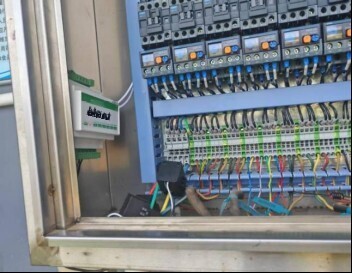
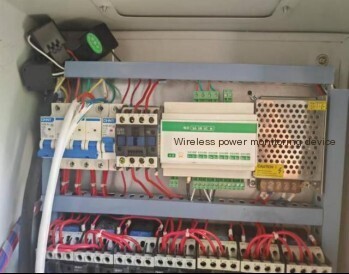
(3) Remote configuration and platform integration debugging
1. Remote parameter configuration: Technicians can remotely configure device parameters, including collection frequency, transmission Protocol, platform docking address, etc., without the need for on-site debugging;
2. Platform access testing: Connect the device to the data acquisition platform IoT, test whether the data transmission is normal, confirm that parameters such as voltage, current, and power can be uploaded to the computer and mobile terminals Real-time, and there is no delay in data refreshing;
3. Alarm rule configuration: According to the operation requirements of farmland wells, configure abnormal alarm thresholds such as overvoltage, overcurrent, equipment offline, and current 0 on the platform, and set alarm push methods (email, SMS, etc.);
4. Third party platform docking: If it is necessary to dock with third-party platforms such as smart agriculture and farmland irrigation, according to the requirements of the platform Protocol, complete data format adaptation, achieve automatic data reporting and synchronization without manual intervention.
(4) Key considerations for installation and implementation
1. All wiring operations must be carried out in a power-off state, and live operations are strictly prohibited to ensure construction safety;
2. The diameter and range of the transformer must be strictly matched with the on-site circuit to avoid errors caused by model mismatch;
After the equipment installation is completed, conduct a 24-hour trial run to troubleshoot issues such as data transmission, collection accuracy, and alarm triggering, and adjust and optimize them in a timely manner;
4. Outdoor distribution boxes in farmland need to be treated with waterproof, dustproof, and rodent proof measures to protect monitoring equipment from external environmental damage;
5. Assign a unique ID and equipment name to each well equipment, accurately locate the point, and facilitate centralized management in the later stage.
5、 Core application functions of the platform
The Shanghai DAQ-IoT platform that comes with this plan provides full process management functions for well monitoring. The computer and mobile interfaces are simple and intuitive, easy to operate, and do not require professional training to get started. The core functions are as follows:
(1) Real-time Data Monitoring
The platform Real-time displays all electrical parameters of each well, including voltage, current, active power, apparent power, power factor, and active energy. The data Real-time is refreshed, and each well is labeled with a unique ID and location name. Management personnel can quickly locate a single well and intuitively grasp the operating status of the equipment Real-time without the need for on-site inspections.
(2) Intelligent judgment of operating status
Automatically determine the working conditions of the well through changes in electricity consumption data:
·Current and power data are available and stable: wellNormal operation;
·No current or power data but equipment online: wellshutdown;
·The device is online but the current is 0 and the voltage is normal: the well water pumpNo load/fault shutdown;
·Abnormal fluctuations in current and power data: wellAbnormal operating loadAll statuses Real-time are marked to facilitate management personnel in quickly detecting abnormal working conditions.
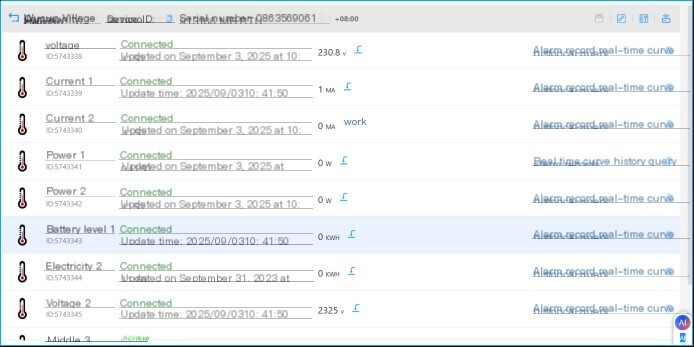
(3) Automatic alarm for abnormal situations
When the well appearsOvervoltage, overcurrent, voltage loss, equipment offline, no-load operationWhen there is an abnormal situation, the platform immediately triggers an alarm throughEmail, mobile SMSPush alarm information to management personnel in various ways, including abnormal well ID, location, and occurrence time. Management personnel can go to handle it as soon as possible to reduce the impact of faults on irrigation and avoid equipment damage due to electrical faults.
(4) Historical data management and analysis
The platform automatically stores the historical operation and energy consumption data of all wells, with no upper limit on storage time, and supports according toHour, day, month, custom time periodQuery, can generateData Real-time curve, energy consumption trend curveAutomatically calculate the maximum, minimum, and average values of voltage, current, and power in each time period, support data report export (Excel format), and provide accurate data basis for irrigation scheduling, energy consumption analysis, and equipment O&M.
(5) Multi point centralized management
The platform supports batch addition of well equipment, which can be grouped and managed according to townships, villages, and farmland areas. Management personnel can view the online and operational status of all wells in one interface, achieving centralized monitoring at multiple locations. A single management personnel can manage dozens or even hundreds of wells simultaneously, greatly improving management efficiency.
(6) Remote management of equipment
Support remote modification of device parameters, including collection frequency, alarm threshold, etc., without on-site operation; Remote viewing of device online status and communication status, timely detection of offline device issues; The platform provides remote upgrade function for device Firmware to ensure continuous optimization of device functionality.
(7) Seamless integration with third-party platforms
The data collected by the device can be standardized through MQTT/TCP/UDP/HTTP Protocol, seamlessly integrated with third-party agriculture IoT platforms, smart agriculture management systems, and farmland irrigation scheduling systems to achieve data sharing and adapt to the overall planning of smart agriculture construction in various regions. There is no need to develop separate data interfaces to reduce integration costs.
6、 Core advantages of the plan
This plan relies on the core products ofShanghai DAQ-IoTtechnology and combines with the actual application scenarios of farmland wells. Compared with traditional manual management and other monitoring solutions, it has the following six core advantages:
1. Easy to deploy and fast to implement: wireless non-invasive design, open transformer card installation, no need for field wiring, installation can be completed in 30 minutes at a single point, and ordinary workers can operate it. It can quickly achieve batch deployment of multiple wells and adapt to the wide distribution characteristics of farmland;
2. Low cost, low O&M: Compared with traditional wired monitoring solutions, it saves a lot of wiring and construction costs. The equipment does not require on-site maintenance by dedicated personnel in the later stage, only remote inspections are needed, greatly reducing labor, material resources, and O&M costs;
3. High reliability and strong adaptability: The equipment adopts ABS fireproof shell, which has power reverse protection, surge static protection, and is suitable for harsh outdoor environments in farmland; Support 4G/LoRa/NB IoT multiple transmission modes without network blind spots; Suitable for all single-phase/three-phase power wells, even old wells without meters can accurately collect data;
4. Intelligence and unmanned operation: realizing automatic data collection, uploading, and analysis, intelligent judgment of operating status, automatic alarm for abnormal situations, completely replacing the traditional manual inspection mode, and achieving centralized management of unmanned operation of the well 24/7;
5. Comprehensive data to support decision-making: Collect multi-dimensional electrical parameters of the well, automatically store historical data, generate reports and trend curves, and provide accurate data support for agricultural irrigation scheduling, energy consumption quota management, water-saving and energy-saving renovation, and equipment O&M;
6. Excellent service and full process guarantee: Shanghai DAQ-IoT Network Technology provides free remote guidance, remote configuration and debugging services, free IoT solution consultation, on-site equipment installation does not require professional debugging, and provides 7 × 24-hour technical support in the later stage to ensure long-term stable operation of the solution.
7、 Implementation Plan and Cycle
The implementation of this plan followsPre preparation - on-site installation - platform integration testing - trial operation - official launchFive step approach, the overall cycle can be flexibly adjusted according to the number of wells, and dozens of wells in a single village/area can be fully implemented within 3-7 days. The specific plan is as follows:
1. Preliminary preparation (1-2 days): Complete on-site investigation, equipment selection and stocking, personnel arrangement, and determine installation plan;
2. On site installation (measured by the number of points): A professional electrician team is divided into groups for equipment installation. Each point takes 30 minutes and can complete the installation of 20-30 wells per day;
3. Platform integration debugging (0.5-1 day): remotely complete device parameter configuration, platform access, alarm rule settings, test data transmission and functionality;
4. Trial operation (1-2 days): All devices go online for trial operation, troubleshooting Data Acquisition, alarm triggering, platform operation and other issues, and optimizing and adjusting them in a timely manner;
5. Formal launch (0.5 days): Organize management personnel to receive platform operation training, officially put the plan into use, and enter the normal operation stage.
8、 Post production O&M and technical services
To ensure the long-term stable operation of the farmland well monitoring system,Shanghai DAQ-IoTTechnology Co., Ltd. provides comprehensive post production and technical services, and has also developed a simple on-siteO&Mspecification, as follows:
(1) Platform O&M Service
1. The platform provides 24/7 uninterrupted operation guarantee, and a professional team is responsible for maintaining the platform servers and networks to ensure data storage and transmission security;
2. Provide free platform function iteration and upgrade, optimize data display, report generation, alarm functions, etc. according to user needs;
3.7 × 24-hour remote technical support, timely response to platform operations, data anomalies and other issues, and quick resolution.
(2) Device O&M Service
1. The equipment provides original factory warranty, and during the warranty period, free maintenance and replacement of faulty equipment are provided;
2. Technical personnel regularly conduct remote inspections of equipment operation status, check equipment online rate and data transmission status, and promptly discover and solve problems such as equipment offline and data anomalies;
3. Provide on-site inspection guidance every six months, focusing on checking the installation status of equipment wiring, transformers, and antennas, cleaning the surface dust of equipment, and ensuring the normal operation of equipment.
(3) On site simple O&M specification
1. Arrange farmland management personnel to regularly inspect the distribution box of the well, and take measures to prevent water, dust, and rodent damage to the equipment to avoid damage from the external environment;
2. After discovering that the device is offline, first check whether the power supply of the distribution box is normal and whether the antenna is detached. Simple faults can be dealt with on site, and complex faults should be promptly addressed by contacting technical personnel;
3. After the irrigation season, conduct a comprehensive inspection of the equipment, cut off the power supply to the equipment, protect the equipment, and ensure normal use in the following year.
(4) Personnel training services
Before the official launch of the plan, free platform operation training will be provided for farmland management personnel, including Real-time data viewing, historical data query, alarm information processing, equipment grouping management, etc. The training will adopt a "on-site demonstration+practical guidance" mode to ensure that management personnel can quickly get started;
9、 Benefit analysis of the plan
The implementation of this plan will completely solve the pain points of traditional farmland well management, fromEconomy, efficiency, safety, and managementThe four dimensions bring significant benefits to agricultural irrigation, as follows:
(1) Economic benefits: Water and energy conservation, cost reduction
1. Through accurate energy consumption statistics, optimize irrigation scheduling plans, avoid "idle" and "excessive irrigation" of wells, achieve agricultural water and energy conservation, and reduce irrigation electricity costs;
2. Replace the traditional manual inspection mode, significantly reduce the manpower, material resources, and time costs of inspection personnel. Through practical implementation cases, the management efficiency has been improved by more than 80%, and the cost ofO&Mhas been reduced by more than 60%.
(2) Efficiency benefits: precise scheduling, improving irrigation efficiency
1. Implement Real-time monitoring of the operation status of the well, promptly detect equipment failures and handle them quickly, avoid irrigation delays caused by well shutdown, and ensure agricultural production progress;
2. Based on the analysis of well operation data, provide scientific basis for farmland irrigation scheduling, achieve on-demand and precise irrigation, and improve the overall efficiency of agricultural irrigation.
(3) Safety benefits: intelligent protection, ensuring electrical safety
1. Real-time monitors the electrical parameters of the well, realizes automatic alarms and linked power outages for abnormal situations such as overvoltage and overcurrent, avoids equipment damage due to electrical faults, and reduces equipment maintenance costs;
2. Standardize the monitoring of electricity consumption in wells, promptly identify potential safety hazards in electricity use, eliminate electricity safety accidents in farmland, and ensure the safety of field production.
(4) Management benefits: data-driven, achieving refined management
1. Transitioning from "manual experience management" to "data-driven management", all well operation data can be checked, analyzed, and traced, providing accurate data support for agricultural irrigation management decisions;
2. Implement remote centralized management of multiple wells, improve the precision level of agricultural irrigation infrastructure management, adapt to the overall requirements of smart agriculture development, and lay a data foundation for the subsequent construction of smart agriculture.
10、 Extension of applicability of the plan
This scheme is not only suitable for monitoring the operation of agricultural machinery wells, but can also be widely applied toFarmland pumping station, irrigation pipeline pressure equipment, greenhouse water supply equipment, rural small-scale water conservancy facilitiesThe energy consumption statistics and operation status monitoring of various agricultural decentralized electrical equipment can be replicated and applied to monitoring scenarios of decentralized equipment such as parks, factories, and environmental protection, providing wireless data acquisition that can be implemented and replicated for intelligent management of various facilities.
Shanghai DAQ-IoTNetwork Technology Co., LtdAlways adhering to the concept of "makingData Acquisitionsimpler", we provide customers with a one-stop solution from equipment selection, scheme design, on-site installation to later stageO&M. We offer free technical consultation and remote guidance throughout the process, helping to upgrade agricultural irrigation intelligence and empower the development of smart agriculture.


评论
发表评论