Does the pointer meter have no communication interface and is difficult to wire? How to solve the problem of OCR data extraction scheme in oil and gas plants?
As a professional provider of IoT data acquisition solutions and an expert in industrial IoT data acquisition, the editor of Shanghai Data Acquisition IOT Technology Co., Ltd, (daq-iot) hereby presents the following introduction, and sincerely welcomes discussions and exchanges. Supported Communication Interfaces: CAN, RS485, Mbus, 4–20mA, Profibus, CC-Link, HART, digital I/O, etc. Industrial Protocols: Modbus RTU/TCP, HJ212, IEC104, DLT645, DLMS, IEC61850, MQTT, etc. Mail:export@daq-iot.com
Preface
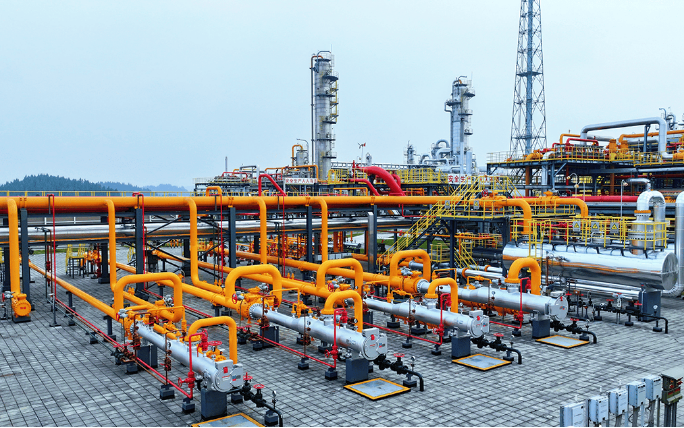
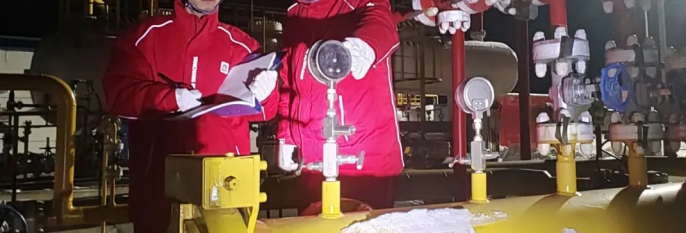
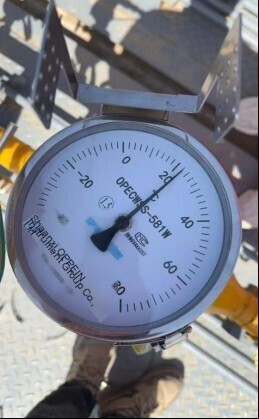
In oil and gas extraction and distribution sites, a large number of pointer pressure gauges and temperature gauges are still widely used. This type of instrument generally lacks communication interfaces, has scattered and remote points, and requires high explosion-proof levels. Traditional manual meter reading has low efficiency, data lag, and large errors. How to achieve fully automatic, low-cost, and high safety Data Acquisition and Remote Monitoring? Shanghai DAQ-IoT website tailored for extending oil and gas production plantsOCR image recognitionThe data collection plan provides mature, implementable, and replicable standard answers.
1、 Project background and core pain points
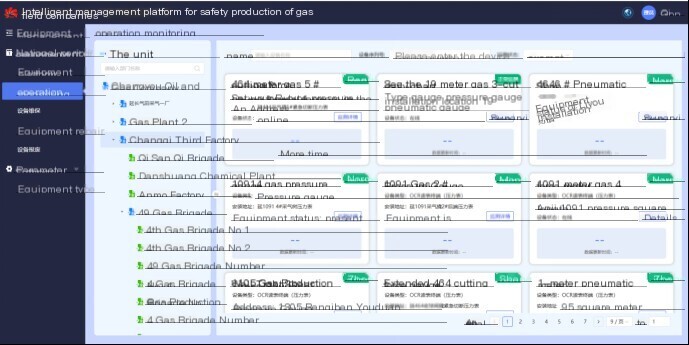
This project is located in Yulin City, Shaanxi Province, serving the second and third gas production plants of Yanchang Petroleum Group. The core goal is to automatically collect and integrate a large amount of scattered pointer pressure gauge and temperature gauge data on the gas pipeline into the group's intelligent safety production management platform, achieving remote supervision,Real-timeregulation, and intelligent analysis.
The pain points on site are very prominent:
1. The meter reading points in the entire factory are complex and scattered, making it difficult to ensure the consistency and continuity of manual meter reading;
2. A large number of pointer instruments lack communication interfaces and cannot be directly connected to digital systems;
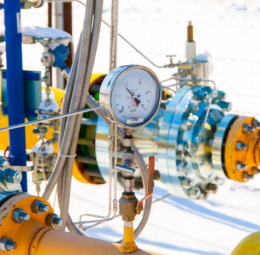
Traditional wiring construction in explosion-proof scenarios is difficult, costly, and poses significant safety risks, making conventional data acquisition schemes almost impossible to implement.
2、 Core products and technological advantages
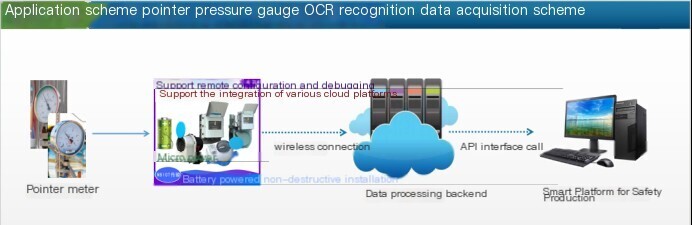
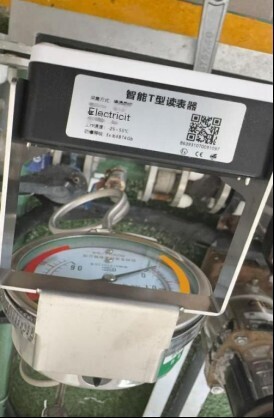
In response to the common challenges in the above industries, the project adoptsMicro power wireless camera meter reader(SC-LP-CAM)As the core collection device, powered by batteries+NB IoT wireless transmission+The cloud based OCR intelligent recognition mode truly achieves wiring free, fast deployment, and stable data collection. This product is designed specifically for old mechanical instruments and instruments without communication interfaces. It supports timed photography, remote parameter configuration, and automatic data upload, and can perfectly adapt to the harsh environment of industrial sites.
Core advantages of the product:
1. Ultra low power consumption and long battery life: 3.6V long-life lithium battery, standby current less than 5 μ A, can support about 3000 photos, and can last up to 7 years per day;
2. High protection adaptation site:IP65 protection levelThe working temperature ranges from -25 ℃ to 75 ℃, suitable for outdoor, high and low temperature, and high humidity conditions;
3. Accurate and reliable recognition: OCR recognition accuracy exceeds 99%, and the original image and data can be traced and verified;
4. Convenient and safe installation: T-shaped clamp installation, does not damage the body, does not require hot wiring, and does not affect production;
5. Flexible and open docking: Built in NB IoT IoT card, supportingAPI/MQTTIntegrate with third-party platforms.
3、 Implementation Plan and Key Points
(1) Technical Implementation Process
1. Install a buckle type OCR recognition terminal on the meter;
2. Take timed photos of the dial at the set frequency;
3. Wireless transmission to the cloud for OCR analysis;
4. The data Real-time is pushed to the group's intelligent management platform.
The entire process does not require wiring, production stoppage, or modification of existing instruments, with a short construction period and minimal on-site disturbance, fully meeting the requirements of explosion-proof and safety management for oil and gas sites.
(2) Key points of on-site adaptation
1. Compatible with single pointer pressure gauges and temperature gauges;
2. The collection frequency supports remote configuration from 10 minutes to 24 hours;
3. Upgradeable external antenna for enclosed spaces;
4. The high-frequency acquisition requirement can be changed to an external power supply version.
4、 Project implementation results
After the project was implemented, the second and third gas production plants achieved 24-hour automatic collection of pressure and temperature data for gas pipelines, remote monitoring, and one click data on the platform, completely eliminating the problems of manual meter reading lag, missed readings, erroneous recordings, and low efficiency. The timeliness and accuracy of data have been significantly improved.
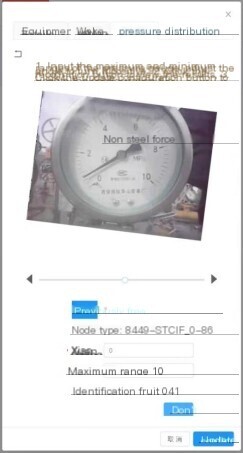
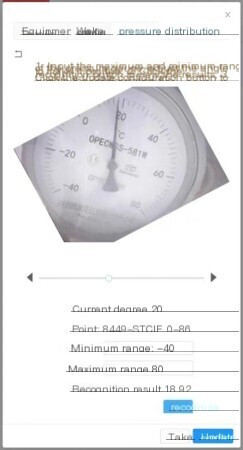
The plan replaces high cost wiring and instrument replacement with extremely low renovation investment, significantly reducing labor costs, while meeting the rigid requirements of explosion prevention, safety, and stability in the petrochemical industry, providing reliable support for the group's safety production, intelligent scheduling, andData Analytics.
5、 Promotion of applicable scenarios for the plan
This solution is not only suitable for gas production plants, but can also be widely applied in the intelligent transformation scenarios of pointer meters in industries such as petroleum, chemical, gas, water, and heating. It is particularly suitable for the digital upgrade of old factory instruments without communication interfaces, explosion-proof and high-risk, and inconvenient wiring. It is currently the preferred low-cost and fast landing solution for digital transformation of industrial sites.


评论
发表评论