Group Energy Measurement Data Acquisition Wireless Infrared Meter Reading Equipment Heat Source Factory Area Office Area Underground Heat Exchange Station Station
As a professional provider of IoT data acquisition solutions and an expert in industrial IoT data acquisition, the editor of Shanghai Data Acquisition IOT Technology Co., Ltd, (daq-iot) hereby presents the following introduction, and sincerely welcomes discussions and exchanges. Supported Communication Interfaces: CAN, RS485, Mbus, 4–20mA, Profibus, CC-Link, HART, digital I/O, etc. Industrial Protocols: Modbus RTU/TCP, HJ212, IEC104, DLT645, DLMS, IEC61850, MQTT, etc. Mail:export@daq-iot.com
asIoTData Acquisitionsolution professional provider, industrial Data Acquisition expert (professional account), and data acquisition IoT editor daq iot would like to introduce the following content here and sincerely welcome everyone to discuss and exchange ideas.
As a professional internet of things data acquisition solutions provider, industrial data acquisition experts (professional households), digital internet of things editor daq - iot here to do the following introduction, and sincerely welcome everyone to discuss and exchange.
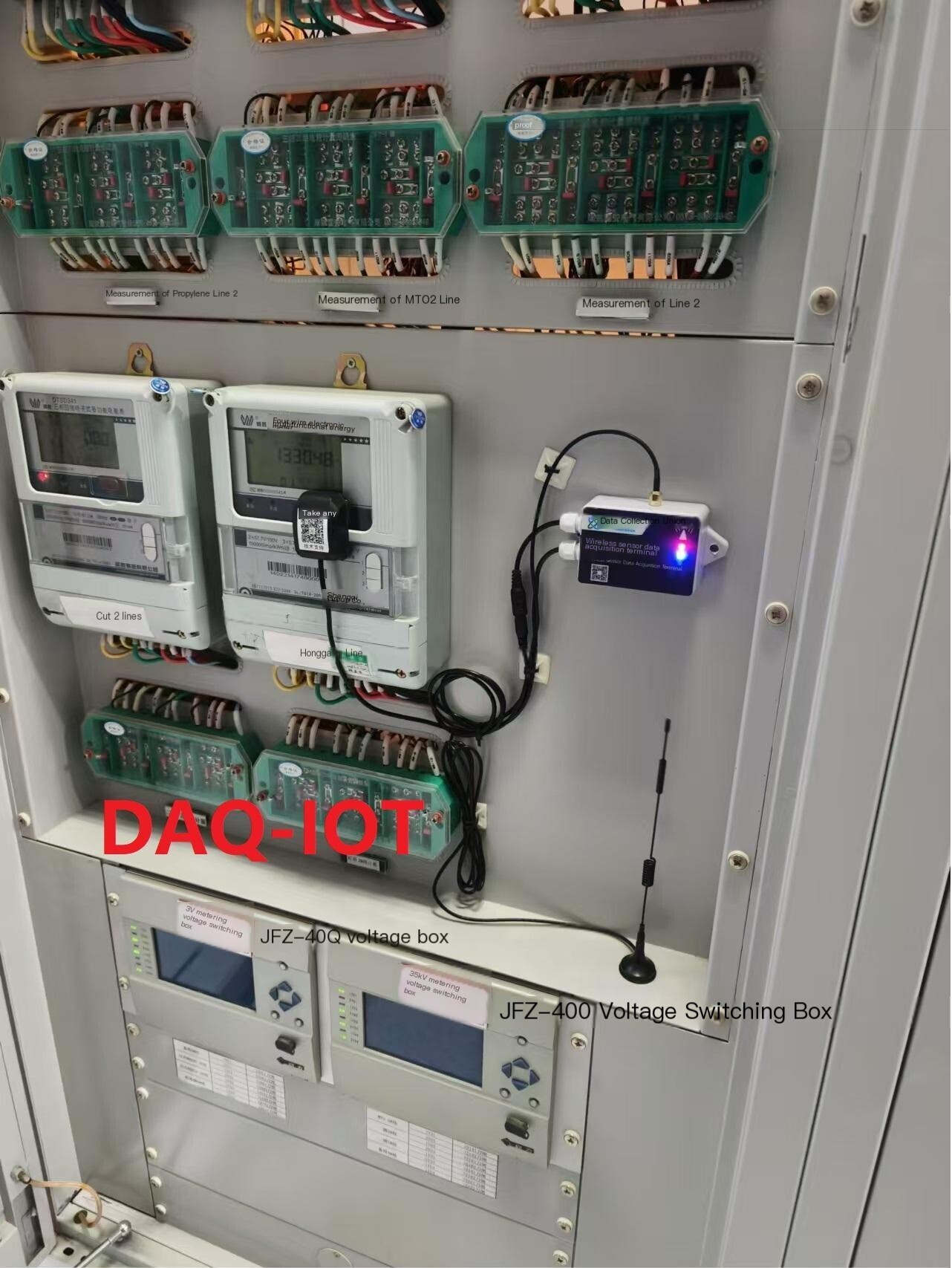
In order to effectively improve the efficiency and accuracy of energy metering Data Acquisition for the group and its subsidiary companies, reduce the complexity and cost of manual operation, it is necessary to purchase infrared meter reading equipment uniformly. Through the convenience and accuracy of infrared meter readers, rapid collection, automatic storage, and batch uploading of data from various measuring equipment can be achieved, reducing manual intervention and effectively avoiding data recording and input errors. This provides timely and reliable data support for the group's energy management analysis, cost accounting, and efficient operational decision-making, while also providing efficient support for energy management related work.
2.2 Project Content:
1) Based on the actual distribution, type differences, and meter reading business volume of measuring equipment in each member company of the group, develop a detailed planInfrared wireless meter readerProcurement Plan: Firstly, conduct comprehensive market research on the infrared communication Protocol used in different types of metering equipment such as electric meters, and select infrared wireless meter reading products that can adapt to multiple communication Protocol and accurately identify data from various brands and models of metering equipment; Furthermore, in the selection process, the applicability of infrared wireless meter readers in different scenarios (heat source plant areas, office areas, underground heat exchange stations) is simultaneously considered to ensure that the selected equipment has sturdy and durable casings, long-lasting batteries, and other characteristics, suitable for use in complex environments. At the same time, necessary auxiliary accessories such as protective covers and backup batteries are purchased for the infrared wireless meter readers to ensure stable operation of the equipment.
2) After completing the procurement of infrared meter readers, the bidding party began planning operational training for relevant personnel of the group and its subsidiary companies: collecting and organizing training materials such as infrared wireless meter reader operation manuals and video tutorials in advance, organizing professional training instructors, and developing training plans covering equipment startupData Acquisition、 Training course outline for basic operations such as exception handling, installation of outdoor antennas, battery replacement, as well as system operations such as data uploading and report viewing, to ensure that staff are proficient in equipment usage methods. Develop a manual for the use of infrared wireless meter readers andO&M, clarifying operating procedures,O&Mstandards, and common issues, providing standardized guidance for subsequent equipment use and management, and assisting the group in efficiently carrying out energy metering work.
3 Technical Requirements
Technical standard for infrared wireless meter reading device
3.1 General Provisions
1) This standard specifies the technical requirements for the customized development and inspection of infrared wireless meter readers.
2) This standard is applicable to equipment customization, development, debugging, quality assurance, and other needs.
3) The parts not specified in this standard shall comply with the relevant requirements of the current national standards or departmental regulations and this regulation.
4) The infrared wireless meter reader should ensure that the equipment and its accessories can work accurately, sensitively, safely and reliably, and pay attention to the neat and beautiful appearance of the layout, which is easy to maintain and repair.
5) The equipment requires the labeling of the first party's signboard, which should have correct, clear, and not easily peel off or fade.
7) This standard sets out the minimum technical requirements, and the installation and use of equipment should ensure compliance with this technical standard and the latest industrial standards.
3.2 Technical Standards
1) AC/DC24-220V power supply can be selected according to the on-site situation.
2) Infrared remote reading, supporting State Grid and State Grid electricity meters Protocol DL/T645-2007 and DL/T645-1997, but not limited to these two types Protocol. According to the actual installation of the electricity meter on site, in case of special encryption of the electricity meter Protocol, the bidder shall decrypt it free of charge.
3) IncludingRS485 communication interfaceUpstream 4Gcat1NB-IoTDual communication, plaintext Protocol, executed in accordance with Party A's Protocol format.
4) Enter the platform designated by Party A and no transfer is allowed.
5) The meter reading frequency can be adapted from 5-1440min, and the data needs to be packaged and uploaded; Example: Collect once every 30 minutes, upload within 24 hours, package and upload 48 pieces of data with timestamps, maintain heartbeat during sleep period, and ensure that the platform system can accurately know whether the device is online.
6) The infrared wireless meter reader needs to be equipped with a 4G outdoor antenna with a lead length of no less than 35 meters.
7) The infrared wireless meter reader requires 3M adhesive tape for fixing the meter reader.
8) The targeted development technology shall be provided to Party A free of charge for use, and cooperation shall be ensured to apply for independent intellectual property rights, utility models, and software copyrights.
9) The equipment needs to be able to operate stably within the temperature range of -30 ℃ to 75 ℃, with a humidity range of 0 to 95% (without condensation), to adapt to the complex environmental conditions in different regions of the group, including cold northern production areas, high temperature and high humidity southern work sites, and outdoor measuring points with large humidity changes.
9) The protection level of the shell shall not be lower than IP64, with dust-proof and splash proof functions, which can effectively resist dust particles and water splashes from all directions, ensuring the normal operation of the equipment in harsh environments and reducing the occurrence rate of failures caused by environmental factors.
10) Purchase quantity
4 Quality Assurance
1) The bidder shall agree that the warranty period of the equipment shall be calculated from the date of system acceptance signature. For a period of 2 heating periods (including 5 years of NB communication fees), if there are any quality problems with the equipment during the warranty period (such as meter reading short circuit, fire, line burnout, etc.), the bidder shall be responsible for providing the equipment again, and any losses and expenses incurred by the user shall be borne by the bidder.
2) During the warranty period, the bidder shall ensure timely and free replacement or repair of any defects or malfunctions that are not caused by the tenderer's abnormal operation.
3) During the warranty and maintenance period, if there is a quality problem with the product, the supplier must arrive at the site within 2 hours for repair, replacement, or return, and the cost (including spare parts) shall be borne by the supplier. If the bidder fails to respond or address the issue within 24 hours of receiving the notification, it shall be deemed that the bidder acknowledges the quality problem and bears all costs incurred as a result. All quality issues, replacement parts, and direct economic losses caused by the quality of the product itself during the warranty period shall be the sole responsibility of the bidder.
4 Quality Assurance
1) The design and manufacturing of equipment should meet the requirements of relevant national standards and specifications, and fully consider the impact of local environmental and usage conditions.
2) The equipment should be made of high-quality materials that meet its usage conditions, and the selection of components should be based on the basic principles of advanced technology, mature reliability, safety, and durability. It is strictly prohibited to use products that have been phased out as announced by the state.
3) The bidder shall propose installation precautions and installation quality assurance methods for the construction site.
4) The bidder shall provide certificates of conformity for the materials used, manufacturing inspection records, and product qualification certificates. The quality assurance certificate for the main purchased parts should be provided, and the supporting manufacturers of the main purchased parts should be recognized by the bidding party.
5) The bidder shall agree that the warranty period of the equipment shall be calculated from the date of system acceptance signature. For a period of 2 heating periods (including 5 years of NB communication fees), if there are any quality problems with the equipment during the warranty period (such as meter reading short circuit, fire, line burnout, etc.), the bidder shall be responsible for replacing and installing the equipment, and any losses caused by the user and all expenses incurred shall be borne by the bidder.
6) During the warranty period, the bidder shall ensure timely and free replacement or repair of any defects or malfunctions that are not caused by the tenderer's abnormal operation.
7) During the warranty and maintenance period, if there is a quality problem with the product, the supplier must arrive at the site within 2 hours for repair, replacement or return, and the cost (including spare parts) shall be borne by the bidder. If the bidder fails to respond or address the issue within 24 hours of receiving the notification, it shall be deemed that the bidder acknowledges the quality problem and bears all costs incurred as a result. All quality issues, replacement parts, and direct economic losses caused by the quality of the product itself during the warranty period shall be the sole responsibility of the bidder.
5 Scope of Supply
1) The bidder guarantees that the equipment provided is brand new, advanced, mature, complete, safe and reliable, and the technical performance of the equipment meets the technical requirements.
2) The bidder shall provide a detailed supply list, which shall sequentially indicate the model, quantity, place of origin, manufacturer, and other contents. For the components necessary for the operation and construction of the entire equipment, even if they are not listed in the appendix of this contract or the quantity is insufficient, the bidder still needs to make up for them during the execution of the contract.
3) The bidder shall provide all special tools and consumables required for installation and maintenance, and provide a detailed supply list.
6 Technical data and delivery schedule
1) The information provided by the bidder shall use the national legal unit system, namely the International System of Units, and the language shall be Chinese. The foreign drawings and documents of imported components shall be translated into Chinese by the bidder (free of charge). Electronic files should adopt a unified format, and the text software should use Microsoft Word. The provided drawings must also provide AUTOCAD electronic text.
2) The organization structure of the data is clear and logical. The information content is correct, accurate, consistent, clear and complete, meeting the engineering requirements.
3) The submission of bidder's information should be timely, sufficient, and meet the requirements of the project schedule. After the contract is signed3 daysProvide all technical data (which should meet the design needs of the design institute) and a schedule for the delivery of all technical data, and confirm with the bidding party.
4) The technical information provided by the bidding party can generally be divided into four aspects: bidding documents, technical documents for review, technical documents for installation, commissioning, and operation, and technical documents provided randomly. The bidding party shall meet the specific requirements of the bidding party for the technical documents in the above four aspects.
5) The bidder shall provide a complete set of communication interface technical documents, including interface documents between the operator and the collection platform, as well as installation location information documents.
6) For other documents and materials that are not included in the technical data list of the contract and are necessary for the project, once discovered, the bidder shall promptly provide them free of charge.
7) Progress requirements for submission of technical documents and drawings
The submission schedule of technical documents and drawings provided by the bidder will meet the requirements of the project schedule.
The bidder shall provide drawings and materials, and the delivery schedule shall be executed in accordance with the contract requirements.
8) The bidder shall provide written materials for applying for a utility model patent.
7 Project Progress Requirements
Require this project to be installed and ready for trial operation by October 1, 2024.
8 Inspection and Acceptance Requirements
1) Quantity verification: Compare the supply list and count the quantity of equipment and supporting accessories one by one to ensure consistency with the list, without missing or insufficient parts.
2) Packaging inspection: Check whether the equipment packaging is intact, whether there is any damage, moisture, compression deformation, etc. If the packaging is damaged, it may affect the quality of the equipment. It is necessary to open the box and inspect the appearance and performance of the equipment.
3) Appearance inspection: After unpacking, check the equipment casing for scratches, deformation, and damage, whether the surface coating is uniform and not peeling off, whether the signboard is pasted in a standardized and clear manner, whether the equipment interface (such as RS485 interface and power interface) is damaged or loose, and whether the supporting accessories have any defects in appearance.
4) Data verification: Verify whether the technical data provided by the bidder is complete, accurate, and meets the technical data delivery requirements of this project, including the type, quantity, format of the data (such as using Microsoft Word format for electronic files and AUTOCAD electronic text for drawings), and the completeness of the content (such as clear labeling of installation drawings and detailed content of operation manuals).


评论
发表评论